



Blog, English Blog, Fish
How to Choose the Best Aquarium Filter For Your Fish Tank | Maplepets
May
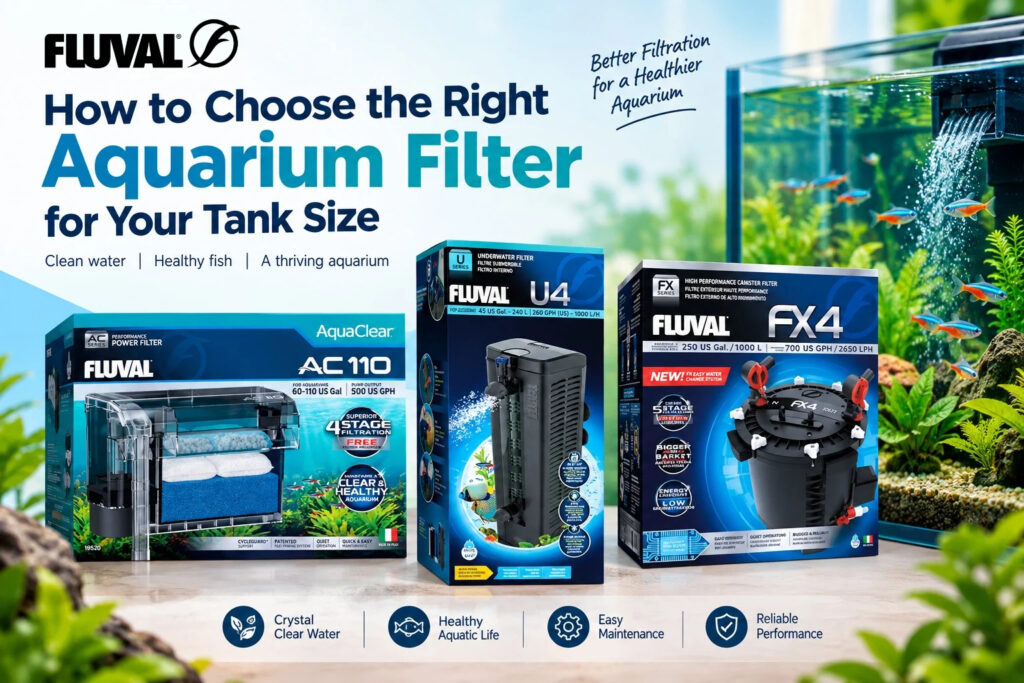
How to Choose the Right Aquarium Filter for Your Tank Size
Choosing the right aquarium filter is essential for maintaining clean water and a healthy environment for your fish. The best aquarium filter for your fish tank depends on several factors, including tank size, fish population, waste production and maintenance requirements.
At MaplePets, you can explore a range of aquarium filters for different aquarium setups, from compact home aquariums to large tanks that require powerful filtration.
In this guide, we explain the different types of aquarium filters, how to choose the right filtration system and what to consider before making a purchase.
Why Does Your Aquarium Need a Filter?
An aquarium filter helps remove suspended waste, uneaten food and other debris from the water. Depending on the filter media used, it can also support beneficial bacteria that help process toxic fish waste.
A suitable filtration system helps you:
- Remove visible particles and debris from aquarium water.
- Support biological filtration and a stable aquarium environment.
- Improve water circulation.
- Maintain water quality alongside regular water changes and proper tank care.
Remember that a filter does not replace regular aquarium maintenance or water testing.
Types of Aquarium Filters
Different filters are designed for different aquarium sizes, layouts and filtration requirements. Understanding their differences can help you select a suitable option.
1. Hang-On-Back (HOB) Filters
Hang-on-back filters attach to the rear edge of an aquarium. Water is drawn into the filter, passes through the filter media and returns to the tank.
Best for: Small to medium-sized aquariums, depending on the model and fish population.
Key advantages:
- Convenient installation.
- Easy access to filter media for maintenance.
- Space-saving design inside the aquarium.
- Suitable for many freshwater community tanks.
Explore AquaClear hang-on-back filters at MaplePets.
2. Internal Aquarium Filters
Internal filters operate inside the aquarium and are commonly used in smaller setups where an external filtration unit may not be necessary.
Best for: Compact aquariums and setups compatible with the selected filter’s rated capacity.
Key advantages:
- Installed inside the tank.
- No external canister required.
- Convenient for suitable small aquarium setups.
Things to consider: An internal filter occupies some space inside the aquarium. Check the rated tank capacity and flow rate before selecting a model.
Explore Fluval underwater filters for available models and specifications.
3. Canister Filters
Canister filters are external filtration systems that draw water through filter media inside a separate canister before returning it to the aquarium. They offer substantial media capacity and can support different stages of filtration.
Best for: Medium to large aquariums, depending on the model, stocking level and filtration requirements.
Key advantages:
- Large capacity for filter media.
- Mechanical, biological and, where appropriate, chemical filtration.
- Flexible media arrangements.
- Suitable options for aquariums with higher filtration demands.
Things to consider: Canister filters generally require more installation space and maintenance planning than simpler filter types.
Explore Fluval canister filters at MaplePets.
Aquarium Filter Comparison Table
Use this table to compare common aquarium filter types and understand which may suit your setup.
| Feature | HOB Filter | Internal Filter | Canister Filter |
|---|---|---|---|
| Installation | Hangs on the aquarium edge | Inside the aquarium | Outside the aquarium |
| Suitable tank size | Small to medium, depending on model | Small to medium, depending on model | Medium to large, depending on model |
| Space required | Space behind the tank | Space inside the tank | Space below or near the tank |
| Filter media capacity | Depends on model | Depends on model | Often larger, depending on model |
| Maintenance access | Generally convenient | Generally convenient | Requires access to the canister |
| Common use | Community aquariums | Compact aquarium setups | Larger or higher-demand setups |
These are general comparisons. Always check the manufacturer’s specifications for the exact model before purchasing.
How to Choose the Right Aquarium Filter
1. Check Your Aquarium Size
Start by checking your aquarium’s water capacity in litres. Choose a filter whose manufacturer-rated capacity is appropriate for your tank.
For example, the Fluval FX6 canister filter is rated for aquariums up to 1,500 litres. This is a model-specific rating, not a recommendation that every aquarium of that size has identical filtration needs.
2. Consider Your Fish Population
The number, size and type of fish affect the amount of waste produced in an aquarium. A heavily stocked tank may require greater filtration capacity than a lightly stocked tank of the same volume.
Consider your fish’s needs, feeding habits and expected adult size before selecting a filter.
3. Check the Flow Rate
The flow rate indicates how much water a filter can move over a period of time. However, a higher flow rate alone does not guarantee better filtration.
Choose a system that provides suitable circulation without creating excessive current for your fish. Also consider the manufacturer’s rated capacity and the effect of filter media on actual flow.
4. Understand Filter Media
Aquarium filters may use three main types of filtration:
- Mechanical filtration: Captures suspended particles and debris.
- Biological filtration: Provides surfaces for beneficial bacteria that process fish waste.
- Chemical filtration: Uses suitable media, such as activated carbon, to help remove certain dissolved substances.
Not every aquarium requires every type of media at all times. Select media according to your aquarium’s requirements and follow the manufacturer’s guidance.
5. Consider Maintenance Requirements
Every filter needs appropriate maintenance to maintain performance. Before purchasing, consider how easily you can access the media, clean the filter and replace components when required.
Avoid cleaning all biological media at once with untreated tap water, as this can harm beneficial bacteria. Follow the filter manufacturer’s maintenance instructions.
Common Aquarium Filtration Mistakes to Avoid
- Choosing a filter without checking its rated aquarium capacity.
- Ignoring fish population and waste production.
- Selecting a flow rate unsuitable for the fish.
- Replacing or cleaning all biological media at the same time.
- Skipping water changes because a filter is installed.
- Delaying maintenance until water quality visibly deteriorates.
Regular maintenance, appropriate feeding and water testing are all important parts of aquarium care.
Explore Aquarium Filters at MaplePets
Choosing the right aquarium filter can make routine aquarium care easier and help maintain suitable water conditions for your fish.
Whether you need a compact internal filter, a convenient hang-on-back system or a high-capacity canister filter, consider your aquarium’s size, stocking level, flow requirements and maintenance needs before making a decision.
Explore the aquarium filter collection at MaplePets to compare available options and their specifications.
For product assistance, contact MaplePets at 7225002228.
Frequently Asked Questions
Which aquarium filter is best for a fish tank?
The best filter depends on aquarium size, fish population, available space and maintenance preferences. HOB filters offer convenient installation, internal filters suit compatible compact setups, and canister filters provide greater media capacity in many models.
How do I choose a filter according to tank size?
Check the manufacturer’s rated aquarium capacity and consider the number and type of fish you keep. A heavily stocked aquarium may require more filtration than a lightly stocked aquarium of the same volume.
Is a canister filter better than a HOB filter?
Not in every situation. Canister filters often provide greater filter media capacity, while HOB filters are generally easier to access and maintain. The right choice depends on your aquarium and filtration requirements.
Does an aquarium filter replace water changes?
No. A filter supports mechanical and biological filtration, but regular partial water changes, water testing and suitable aquarium care remain necessary.
How often should I clean my aquarium filter?
The schedule depends on the filter model, media, fish population and amount of waste. Follow the manufacturer’s instructions and clean the filter when required without unnecessarily disrupting beneficial bacteria.