



Bird, Blog, Cat, Dog, English Blog, Fish, Reptile
How to Take Care of Your Pets During Monsoon: A Complete Guide for Indian Pet Parents
Jul
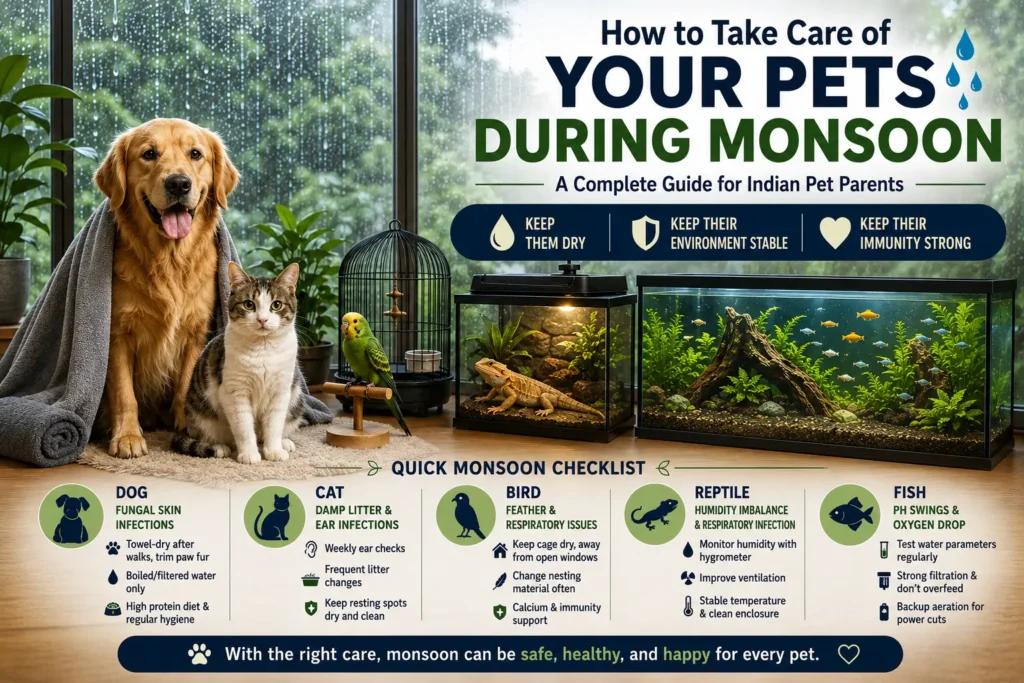
Monsoon in India isn’t just about muddy shoes and traffic jams — it’s the season your pets need the most attention. High humidity, stagnant water, sudden temperature swings, and power cuts don’t just make life inconvenient for you; they create the perfect storm for fungal infections, digestive upsets, and stressed-out aquariums. Whether you’re raising a dog, a cat, a bird, a reptile, or maintaining a fish tank, monsoon pet care comes down to the same three things: keep them dry, keep their environment stable, and keep their immunity strong.
Here’s a practical, season-specific breakdown for every kind of pet parent.
1. Dog Care in Rainy Season
Dogs bear the brunt of the monsoon simply because they still need to go outside. The biggest risks are fungal skin infections, ear infections, and waterborne diseases like leptospirosis, all of which trace back to one root cause — trapped moisture.
- Towel-dry after every walk, especially paws, belly, and ear folds
- Trim the fur between paw pads to stop mud and bacteria from building up
- Stick to filtered or boiled water only — stagnant puddle water is a major source of stomach infections
- Don’t over-bathe — once every 2–3 weeks is enough; over-bathing strips natural oils that protect the skin
- Rethink the diet for the season — a grain-free, high-protein formula digests more easily when activity and gut resilience both take a hit in humid weather
We’ve already covered dog-specific monsoon hygiene, ticks, and diet in more depth in our detailed rainy season guide for dogs — worth a read if you’re a dog parent specifically.
2. Cat Care During Monsoon
Cats are self-groomers, so people assume they’re low-maintenance in the rains — but humidity still causes real problems: matted fur, ear infections, and litter that turns into a bacterial breeding ground faster than usual.
- Check ears weekly — trapped moisture here is easy to miss since cats hide discomfort well
- Watch for excessive licking or grooming, which often signals skin irritation
- Change litter more frequently — damp litter clumps and grows bacteria faster in humid weather, so this is not the season to stretch out your litter-change schedule
- Keep resting spots dry — a damp bed is one of the fastest ways to trigger skin and coat issues in cats
A clumping, odor-controlling litter and a proper litter box setup genuinely make a difference here — it’s one of the few monsoon upgrades that’s actually about hygiene, not just comfort. If you’re auditing your cat’s grooming and hygiene routine for the season, our Catit cat care range is worth browsing.
3. Bird Care in Rainy Season
Birds are more sensitive to humidity than most pet parents realize. Damp cages, wet nesting material, and feather problems spike during monsoon, and a bird that’s fighting a feather or respiratory issue needs stronger nutritional support, not less.
- Keep the cage dry — move it away from open windows and direct rain exposure
- Change nesting material more often — damp bedding is a fast track to respiratory stress
- Watch for feather problems — dull, brittle, or excessively molting feathers are often the first visible sign of a monsoon-related nutrition gap
- Prioritize calcium and immunity support — breeding birds especially need stable nutrition since eggs and chicks are far more sensitive to humidity swings
This is exactly where a dedicated supplement helps — our HARI bird supplement range is built for immunity and feather health, which is the first thing that takes a hit when humidity stays high for weeks at a stretch.
4. Reptile Care in Monsoon
Reptiles feel monsoon differently than every other pet on this list — they’re ectothermic, so they can’t regulate their own body temperature or moisture balance at all. Their entire wellbeing depends on you getting the enclosure’s humidity and temperature right, and monsoon is exactly when that balance tends to drift.
- Monitor humidity with a proper gauge — don’t guess; excess ambient humidity from outside can push a terrarium’s internal humidity too high without you noticing
- Improve ventilation — persistently high humidity in an enclosure is almost always a ventilation problem, not a “needs more misting” problem
- Watch for early respiratory signs — wheezing, bubbling from the nose or mouth, or open-mouth breathing are early red flags that shouldn’t be ignored
- Check for scale rot and skin issues — damp, unsanitary substrate is the main cause, so substrate changes may need to happen more often this season
- Keep temperature gradients stable — sudden cooling on rainy days affects digestion and immunity just as much as humidity does
A digital hygrometer and thermostat-controlled heating are non-negotiable during monsoon, not optional extras. Our Exo Terra reptile range covers terrarium humidity and temperature control equipment if your current setup hasn’t been monsoon-checked yet.
5. Aquarium Fish Care in Monsoon
This is the pet care category most people forget entirely — but monsoon is genuinely hard on a fish tank. Falling room temperatures, pH swings from rain-diluted water, dropping oxygen levels, and power cuts that stop your filter can all hit within the same week.
- Test water parameters more often — pH and KH shift more in monsoon than any other season, and by the time you see fin rot or fungal spots, the water’s already been off for a while
- Don’t overfeed — fish eat less in unstable weather, and leftover food rotting in the tank is one of the fastest ways to spike ammonia
- Keep filtration strong and consistent — this is the single biggest lever you have against monsoon water-quality problems
- Have a backup plan for power cuts — even a simple battery air pump prevents an oxygen crash during outages
- Watch for early disease signs — white cotton-like patches, torn fins, or fish gasping at the surface are all early monsoon red flags
A reliable canister filter is what actually keeps water parameters stable through erratic monsoon conditions — it’s less about buying something new and more about making sure your existing filtration is running at full strength this season. Our Fluval filtration range and water & plant care products are both worth a look if you haven’t done a monsoon check on your setup yet.
Quick Monsoon Checklist
| Pet | #1 Monsoon Risk | What Actually Helps |
|---|---|---|
| Dog | Fungal skin infections | Towel-dry after walks, trim paw fur |
| Cat | Damp litter & ear infections | Frequent litter changes, weekly ear checks |
| Bird | Feather & respiratory issues | Dry cage, calcium/immunity support |
| Reptile | Humidity imbalance & respiratory infection | Hygrometer, better ventilation, stable temperature |
| Fish | pH swings & oxygen drop | Regular water testing, strong filtration |
Final Word
Every pet’s monsoon problems trace back to the same two things — moisture that doesn’t dry out, and an environment or immune system that isn’t getting enough support. Hygiene habits handle the first part. The right equipment and nutrition handle the second. Get both right for whichever pet you’re raising, and monsoon stops being a season you dread and just becomes another season you’re prepared for.
FAQs
Q1. What is the biggest monsoon risk for each type of pet?
Dogs face fungal skin infections, cats face damp litter and ear infections, birds face feather and respiratory issues, reptiles face humidity imbalance and respiratory infection, and fish face pH swings and oxygen drop.
Q2. How often should I bathe my dog during monsoon?
Once every 2-3 weeks is enough — over-bathing strips the natural oils that protect a dog’s skin, which is counterproductive during a season already hard on skin health.
Q3. Why do cats need more frequent litter changes in monsoon?
Damp litter clumps and grows bacteria faster in humid weather, so stretching out the litter-change schedule during monsoon makes hygiene problems worse than usual.
Q4. How can I tell if my bird is struggling with monsoon humidity?
Dull, brittle, or excessively molting feathers are often the first visible sign of a monsoon-related nutrition gap, along with damp nesting material causing respiratory stress.
Q5. What causes high humidity in a reptile terrarium during monsoon?
Persistently high humidity in an enclosure is almost always a ventilation problem rather than a need for more misting, so improving airflow matters more than adjusting misting routines.
Q6. What are early warning signs of respiratory issues in reptiles?
Wheezing, bubbling from the nose or mouth, or open-mouth breathing are early red flags that shouldn’t be ignored during monsoon humidity swings.
Q7. Why does monsoon affect aquarium fish tanks?
Falling room temperatures, pH swings from rain-diluted water, dropping oxygen levels, and power cuts that stop filtration can all hit within the same week, making regular water testing essential.
Q8. How can I protect my fish tank during monsoon power cuts?
Having a backup plan like a simple battery air pump prevents an oxygen crash during outages, which are more common in monsoon.