



Bird, Blog, English Blog
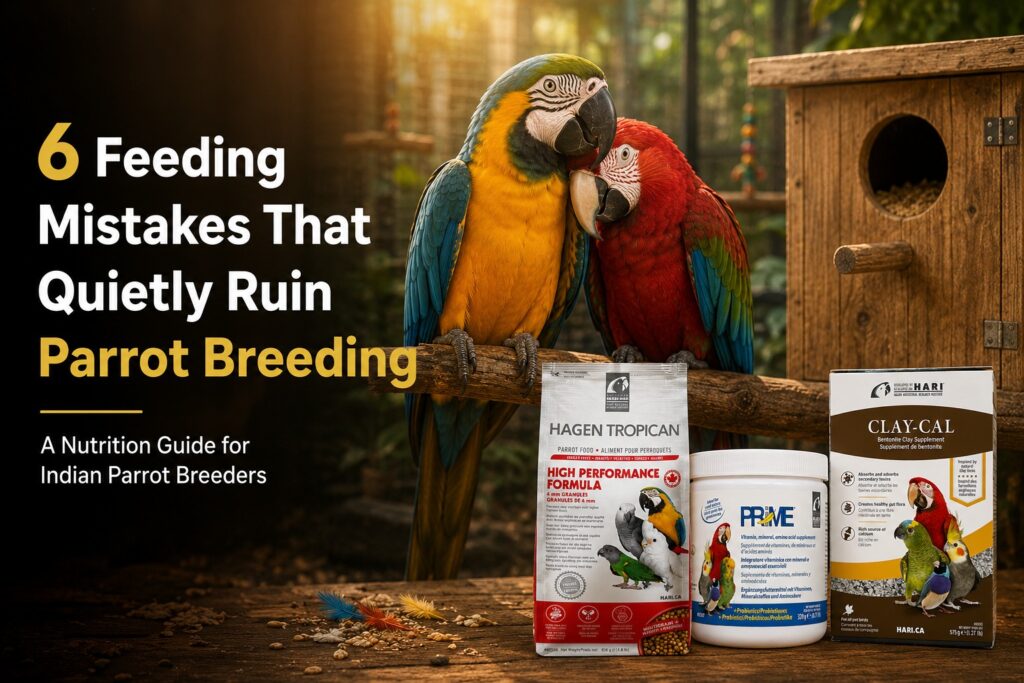
6 Feeding Mistakes That Quietly Ruin Parrot Breeding
Aug
If your breeding pair — whether it’s a pair of large parrots, cockatiels, or lovebirds — has been together for months and you’re still waiting for eggs, or the eggs that do come are infertile, thin-shelled, or just don’t hatch, it’s easy to start blaming the birds themselves. Wrong pairing, wrong age, bad luck. But before you go down that road, it’s worth asking yourself one honest question: what’s actually in their food bowl right now?
Most breeding struggles that Indian parrot parents deal with aren’t really a “the birds just don’t want to breed” problem. They’re a nutrition problem hiding in plain sight — small, everyday feeding habits that feel completely normal but quietly work against everything you’re trying to achieve. Here are the ones we see most often, and how to fix them.
1. Letting Seeds Take Over the Bowl
Let’s be clear about something first — seeds aren’t the enemy. They’re a natural, enjoyable part of a parrot’s diet, and there’s nothing wrong with including good-quality seed and enrichment mixes as part of what you feed. The real issue starts when seeds quietly become the main thing your bird eats, day after day, especially heading into breeding season.
Here’s why that matters: seeds alone don’t carry enough calcium, vitamin A, or certain amino acids that a breeding bird’s body specifically needs to build strong eggs and support fertility. If seeds are the bulk of the diet rather than one part of a balanced one, you may notice weaker eggshells, smaller clutches, or a pair that just never seems to get to the egg-laying stage at all.
What actually helps: think of it as a balance, not a swap. A good formulated diet like Tropican should form the nutritional foundation, with seed mixes like Tropimix or the Gourmet Seed, Fruit & Veg Mix layered in for enrichment and variety, the way they’re meant to be used. You’re not removing something your bird loves — you’re just making sure it isn’t carrying the whole nutritional load on its own.
2. Changing the Diet Too Late
A lot of breeders wait until they actually see mating behavior before adjusting what they’re feeding. By then, honestly, you’re already behind. A breeding bird’s body needs weeks to build up the calcium and condition reserves it will need — you can’t do that overnight once eggs are already on the way.
What actually helps: start shifting toward a higher-protein, higher-calcium diet like Tropican High Performance Formula about 3–4 weeks before you plan to pair your birds, not after you notice signs of breeding. Think of it as preparing the runway before the flight, not after.
3. Skipping the Extra Support Your Breeding Pair Needs
Even if your base diet is decent, active breeding parrots burn through calcium and key nutrients fast, especially across multiple clutches in one season. This is one of the biggest hidden causes of egg binding — a condition that’s genuinely dangerous and something every breeder dreads.
What actually helps: a dedicated breeding-specific supplement, not just any multivitamin sitting in your cabinet. This is exactly the gap the HARI Bird Breeding Prime Vitamin Supplement is designed for — also available in a smaller 30g size if you’re feeding a smaller flock. Pairing this with a calcium source like Clay-Cal Bentonite Clay Supplement gives targeted support for exactly what a breeding bird’s body is going through.
4. Treating Fatty Snacks as “Bonding Time”
We get it — hand-feeding a nut or a bit of cheese feels like a sweet bonding moment with your bird. But too much of this adds up, and overweight parrots consistently show lower fertility. It’s one of those mistakes that comes from genuine love for your bird, which almost makes it harder to catch.
What actually helps: keep treats small and occasional, and let the daily diet do the heavy lifting nutritionally, especially once you’re actively trying to breed.
5. Assuming “Bird Food” Is All the Same
If you’ve ever grabbed a generic mixed-seed pack off a pet store shelf without checking whether it’s actually suited to your bird’s species or life stage, you’re not alone — most people have done this at some point. But a breeding macaw and a maintenance-diet budgie genuinely don’t need the same thing, and feeding a one-size-fits-all mix during breeding season is often the invisible reason a perfectly healthy-looking pair still isn’t producing.
What actually helps: look for species-appropriate, life-stage-specific formulas. HARI’s range makes this easy — Tropimix for Large Parrots, Tropimix for Small Parrots, a dedicated Cockatiel & Lovebird enrichment mix, and Tropican granules sized specifically for cockatiels versus larger parrots — because those needs are genuinely different.
6. Easing Off Once the Eggs Are Laid
This one catches a lot of well-meaning breeders off guard. You finally see eggs, you relax a little, and the extra supplementation quietly stops. But nutritional needs don’t end at laying — incubation and chick-rearing (whether parent-fed or hand-fed) are some of the most demanding periods for both parents.
What actually helps: keep the breeding-level nutrition going through the full cycle, not just the lead-up. And if you’re hand-feeding chicks yourself, a proper formula built for a baby bird’s needs makes a real difference here — Tropican Hand-Feeding Formula (also available in a smaller 400g pack) isn’t a stage to improvise on.
Before You Blame the Pair
It’s easy to assume something’s wrong with your birds when breeding doesn’t go as planned. But nutrition is one of the few things you actually have full control over as a breeder — and more often than people expect, it’s the quiet root cause behind stalled breeding, weak clutches, or fertility issues that seemed to come out of nowhere. Before you second-guess your pair, it’s worth taking an honest look at the bowl first.
Where to Get Genuine HARI Parrot Breeding Nutrition in India
Maple Pets International is the official authorized distributor for HARI in India, offering the full range across bird food, supplements, and treats — Tropican formulas for every life stage, Tropimix enrichment mixes for large and small parrots, cockatiels, lovebirds, and budgies, the Bird Breeding Prime Vitamin Supplement, and Hand-Feeding Formula for baby birds. If breeding nutrition is where consistency and genuine quality actually matter, it’s worth sourcing it right. Browse the full HARI range at maplepets.in/hari.
FAQs
1. What is the best diet for breeding parrots?
A balanced diet is the key to successful parrot breeding. Breeding parrots need high-quality formulated food, calcium, protein, vitamins, and minerals along with seeds, fresh fruits, and vegetables. Seeds should be part of the diet, not the entire diet.
2. Why are my parrots not laying eggs?
Parrots may not lay eggs due to poor nutrition, lack of calcium, incorrect breeding age, inadequate lighting, stress, or unsuitable nesting conditions. Improving their diet and environment can significantly increase breeding success.
3. How can I improve my parrot’s fertility naturally?
You can improve parrot fertility by providing a balanced breeding diet, ensuring adequate calcium and vitamin supplementation, maintaining a healthy body weight, reducing stress, and preparing breeding pairs with proper nutrition several weeks before the breeding season.
4. Do breeding parrots need calcium supplements?
Yes. Calcium is essential for strong eggshell formation, healthy muscle function, and reducing the risk of egg binding. Breeding hens have a much higher calcium requirement than birds kept for maintenance.
5. When should I start feeding a breeding diet to parrots?
Ideally, switch to a breeding diet 3–4 weeks before pairing your birds. This gives them enough time to build nutrient reserves needed for healthy eggs, better fertility, and successful chick development.